October 20, 2026
Utility APIs: How They Work, Key Benefits, and How to Choose One
Connecting to multiple utility providers doesn’t have to be complicated. Find out how a utility API simplifies bill payments, what features to look for, and how to launch within as little as 24 hours.
Paying an electricity bill or buying water credits shouldn’t require your customers to switch apps endlessly.
A utility API is a software interface that lets you connect your platforms to utility providers worldwide, so your customers can pay for essential services in your app or on your website.
Instead of connecting to multiple providers individually, a utility API lets you access multiple billers with a single integration. This lets your customers pay their bills conveniently from a single platform, no matter where they live. You can also earn extra revenue and retain customers.
But how does a utility API work, and what should you look for when choosing one?
This article explores these questions. We’ll cover:
- What is a utility API and how does it work?
- How can you benefit from a utility bill payment API?
- How can your customers benefit from a prepaid utility API?
- What to look for when selecting a utility API
- How to integrate zendit’s utility API in a day
Want to add prepaid utilities to your platform? Book a demo now to see how zendit API can help you get started.
1. What is a utility API and how does it work?
Imagine you have customers in Africa, Asia, and Latin America who want to pay their electricity bills on your website. To support them, you’d need connections with electricity billers in every country where your customers live.
Extend this to water bills and gas bills, and the list of billers you need to connect with adds up.
A utility API solves this problem by allowing you to connect to multiple utility providers through a single integration.
In other words, a utility API is the infrastructure layer that connects businesses to utility providers. These businesses include fintechs, superapps, banks, marketplaces, and merchants that offer utility bill payments alongside other digital services (eSIMs, digital gift cards, prepaid debit cards, and more).
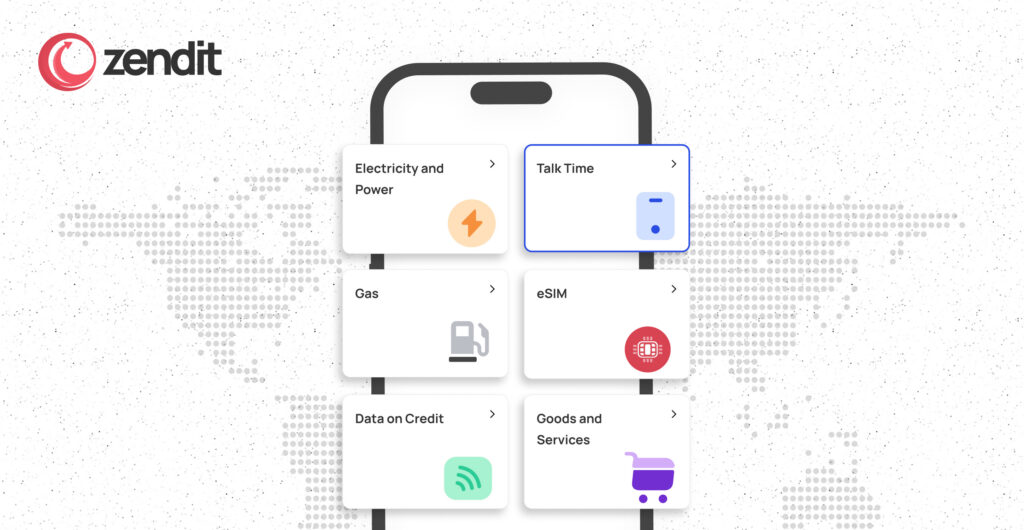
Some of the services consumers can access from a business integrating a utility bill payments API include:
- Electricity bills
- Water bills
- Gas bills
- Cable TV and direct-to-home (DTH) subscriptions
- Internet subscriptions
- Government bills
In addition to connecting you to utility providers, the API offers the following services:
- Service discovery: You can search for specific billers and services in particular countries. The API automatically updates the list of billers and bills so your customers can discover new bill payment options as they are added.
- Account validation: The utility API validates whether your customer has an existing account with the biller. For example, before paying an electricity bill, it confirms whether the meter number is valid.
- Payment processing: The API receives payment and routes it to the utility provider. It then processes the payment and generates value for the customer.
- Transaction confirmation: If it is successful, the API records the transaction and sends a payment receipt to the customer. The transaction record helps you reconcile accounts or handle customer complaints.
Let’s illustrate by considering what happens in a typical utility bill payment flow:
- Customer requests a utility service: Let’s say a customer in Kenya requests a cable TV subscription from a popular biller. They input their smartcard number.
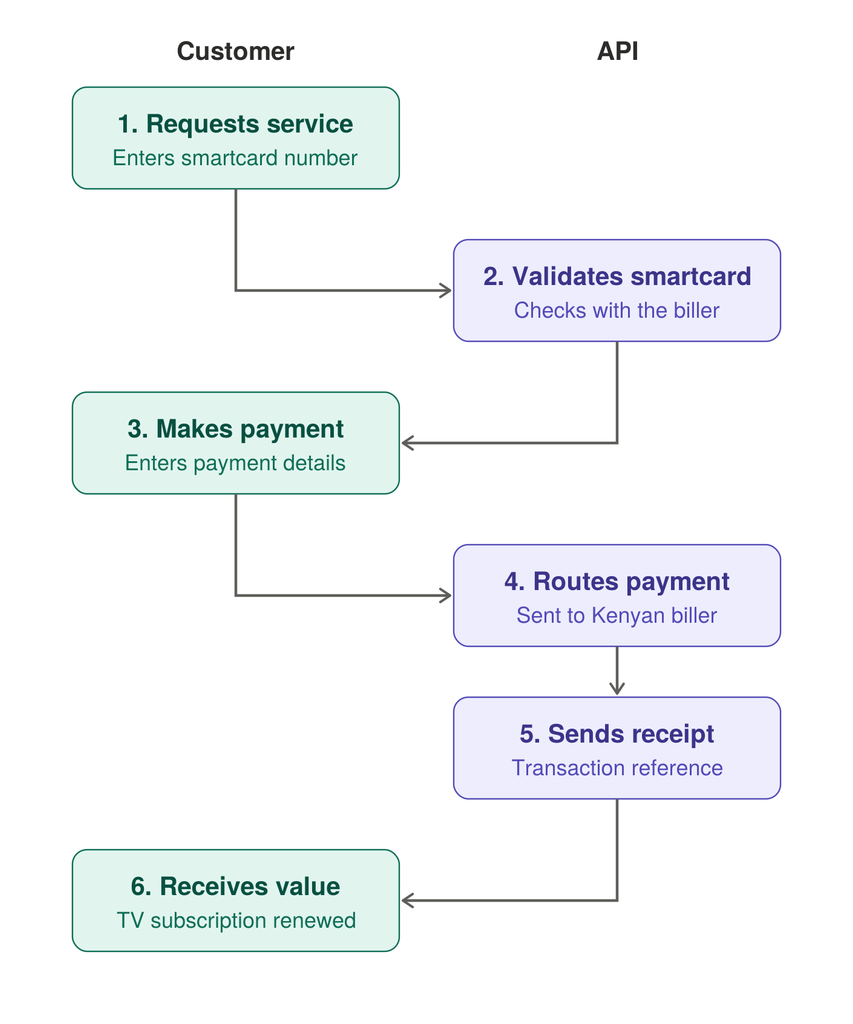
- API validates account: The API validates the IUC number from the biller.
- Customer completes payment: The customer enters payment details and completes the payment.
- API processes payment: The API routes the transaction to the Kenyan biller.
- API sends transaction confirmation: If the payment is successful, the API sends the transaction reference and receipt.
- Customer receives value: The biller renews the TV subscription.
2. How can you benefit from a utility bill payment API?
As a business selling goods or services through an app or a website, integrating a prepaid utility API offers several benefits:
- New revenue streams: You can earn markups on customer utility payments. You can also earn a portion of transaction fees and service charges, depending on your arrangement with the utility API provider.
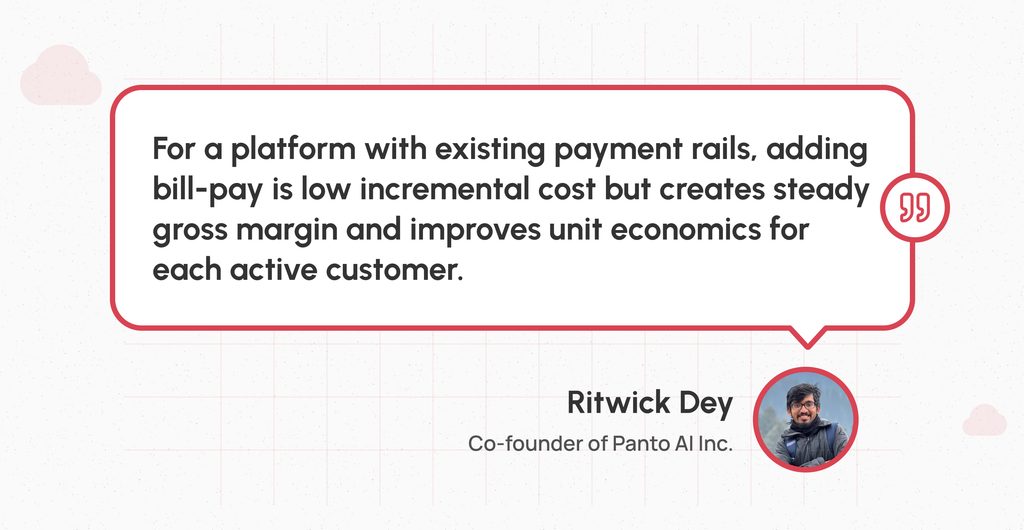
“Utility payments generate recurring transaction fees and short-term float,” according to Ritwick Dey Co-Founder of Panto AI, a QA testing platform. “For a platform with existing payment rails, adding bill-pay is low incremental cost but creates steady gross margin and improves unit economics for each active customer.”
- Broader service coverage: An API gives you access to multiple billers and saves you the time and effort of integrating with each one.
- Customer retention: If customers have to leave your app or website to pay utility bills, you risk losing them to superapps that offer integrated services.
- Business expansion: You can upsell other products or services to customers who visit your platform for utility payments.
“Billing is a habitual touchpoint,” according to Ritwick. “Offering utility payments embeds your product in daily/weekly routines, increases monthly active use, and creates opportunities to cross-sell adjacent services (credit, insurance, energy efficiency offers). That stickiness reduces churn and raises lifetime value more reliably than one-off features.”
- Expansion into new markets: Utility bill payment is a valued service in Africa, Asia, Latin America, and the Caribbean. You can extend into these markets by integrating with a utility API that covers them.
- Simplified management: The API handles the most crucial parts of the utility bill payment process. This makes it easy to offer these services without spending much time or money.
3. How can your customers benefit from a prepaid utility API?
Whether you’ll enjoy these benefits depends on how valuable the utility API is to the end users. If it benefits them, they’ll demand your services, leading to higher revenue, expansion into new markets, and customer retention.
So, what benefits does a prepaid utility API offer end users?
Below are the most important:
- Integrated platform: With a utility API, you can help your customers pay all their bills from one platform. If the API also supports eSIM, gift cards, and prepaid debit cards, users can access all prepayment services without switching apps.
- Convenience: End users can pay for all types of utilities from a single platform on their phone, tablet, or laptop. Having all billers in one platform also makes bill payment much more convenient.
- Lower risk of payment errors: An effective API validates accounts and flags issues before customers complete payment.
- Instant processing: Customers receive payment receipts and service tokens instantly.
- Record keeping: The API generates payment receipts for you and your customer, which can help handle any reconciliation down the road.
4. What to look for when selecting a utility API
Although utility APIs perform the same fundamental functions, certain differences make some more valuable than others.
Here are some of the factors to consider when selecting a utility API that provides the most value:
Service coverage
A utility API that covers a broad range of services, electricity, water, gas, TV, internet, and government bills, may be more valuable to your customers than one with limited offerings.
Geographic coverage
A global reach is important if you have a diversified customer base. The more regions the API reaches, the better.
Integration speed and ease
Prioritize APIs with a sandbox environment for testing, clear API documentation, SDKs and code samples, and responsive technical support. Also, integration speed is essential. You can integrate with a good API in days, not weeks.
“Look for well-documented SDKs, sandbox environments, webhooks for real‑time status, idempotent endpoints, retry semantics, and batch reconciliation APIs,” advised Ritwick. “Rich reporting, CSV exports, and automatic reconciliation hooks reduce manual work and accounting errors.”
Also, ensure the platform doesn’t experience frequent downtime, as it can cause payments to fail and drive customer churn.
Transaction speed
A good API processes transactions in real time and delivers value immediately. A customer whose TV subscription expired while watching their favorite show doesn’t have to wait hours to get value.
Security and compliance
The right API includes strong security protocols: encrypted data transmission, secure authentication, fraud prevention, and regulatory compliance.
Account validation function
This is essential for reducing failed transactions. While this increases convenience for your customers, it also reduces the stress of managing disputes and reconciliations.
Pricing and other commercial terms
The API pricing structure should allow you to maintain healthy margins and a sustainable business. Look for competitive discounts and a share of some transaction fees.
Customer support
Active customer support allows you to resolve issues quickly and minimize disruptions.
Reporting
The API should also provide downloadable statements, transaction history, and real-time transaction tracking. Adequate reports help with accounting and reconciliation against customers’ reports.
Scalability
Choose an API that can grow with your business. A good API can support 100 weekly requests and scale up to 1,000 requests without a dip in service quality.
5. How to integrate zendit’s utility API in a day
zendit’s prepaid utilities API connects you to 20 billers operating in 10 countries in Africa and the Caribbean and Central America. It supports utilities like electricity and gas, plus other prepayment services like mobile top-up, gift cards, and eSIMs.
Integration is simple, and the zendit API is scalable.
The API documentation is easy to understand, and you can integrate faster with ready-to-use SDKs. You can also test integration in a free, full sandbox environment.
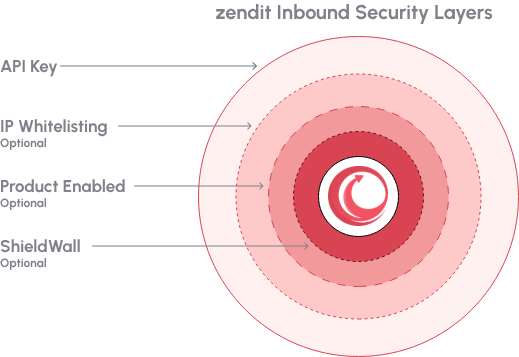
Furthermore, zendit provides security features that protect you during the integration process. These include:
- API keys: For verifying who is making requests.
- IP whitelisting: Restricts access to specific IP addresses.
- Catalog Security: Disable certain products so your customers can’t access them
- ShieldWall: A webhook verifies transaction authenticity
zendit supports real-time processing and also provides full transaction traceability and operational visibility. The customer support team is also ready to help with integration or any other issues you experience while using the platform.
These features make zendit suitable for superapps, marketplaces, banks, fintechs, non-governmental organizations (NGOs), remittance companies, bill payment platforms, and more.
If you find all these features beneficial, you can integrate zendit’s prepaid utilities API into your app or website in a day by following these simple steps:
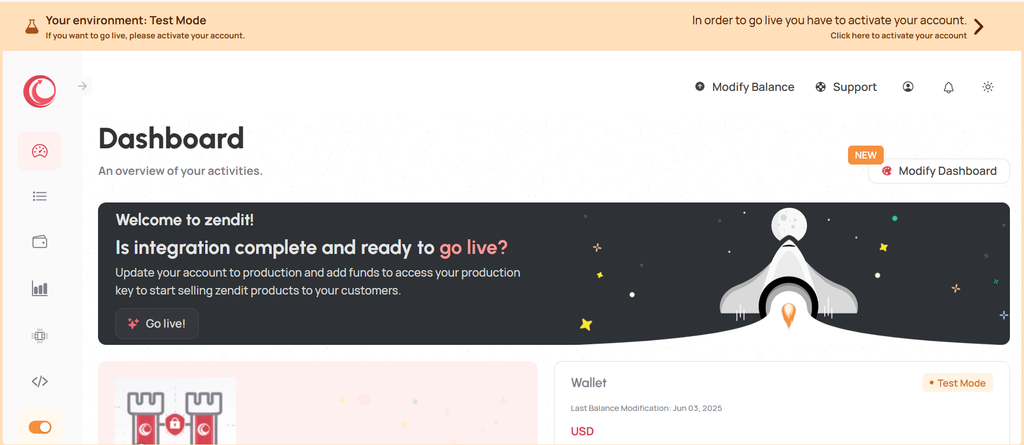
1. Create an account
Create an account on our website in minutes.
Once you are done, you will access your account’s homepage, where you’ll complete the rest of the process:
2. Obtain API credentials
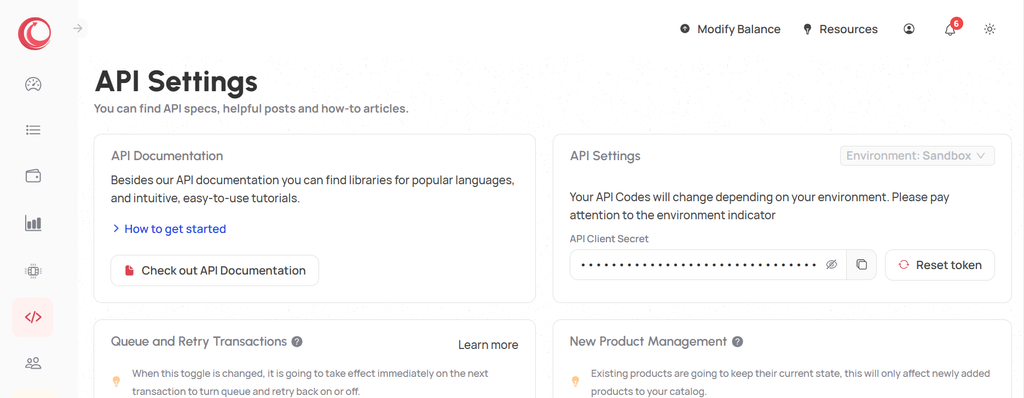
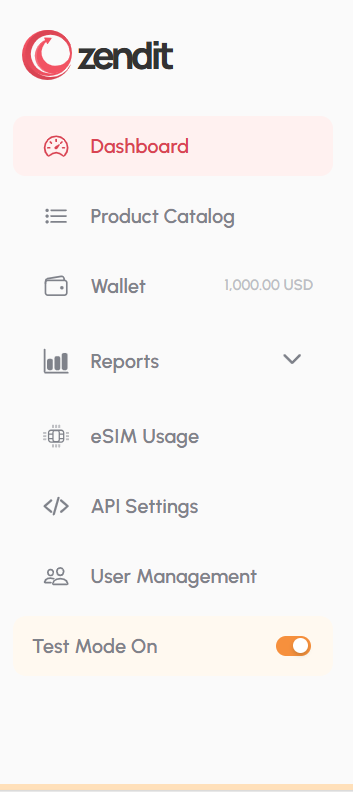
When you go to the API Settings section (second to the last tab on the left sidebar), you will find the API keys you need for this integration.
Since all newly created accounts are in test mode, the API credentials here are valid only in that mode.
3. Configure the security settings
Before proceeding, implement all available security features. This helps guarantee secure integration.
4. Visit Swagger to start the integration
Swagger makes the integration process even smoother, with descriptions of each API call, parameter options, and examples.
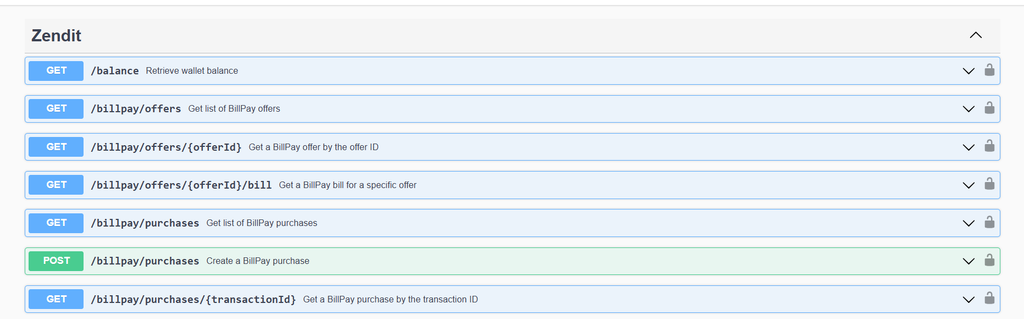
To use Swagger, you’ll need to enter the authorization code under the API Settings section on your homepage.
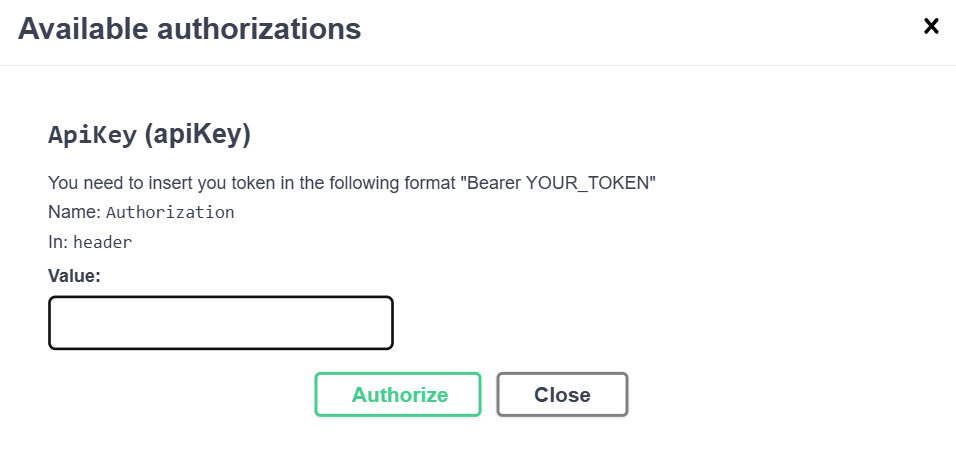
Remember to copy the right API key based on the mode you are in: test or production.
5. Retrieve available utility services
Start with the GET/vouchers/offers endpoint to get a list of all available utility bill payment products.
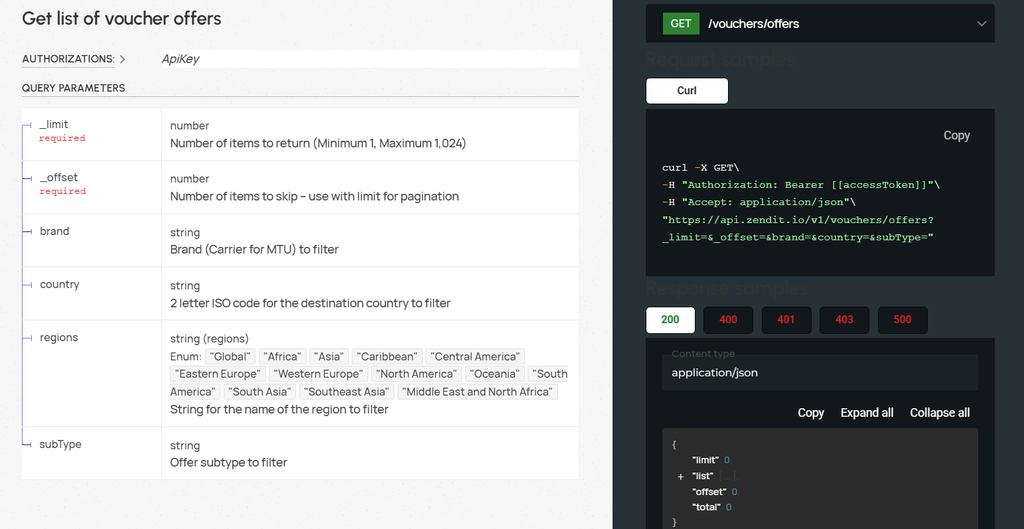
You can filter by brand, country, and region. The limit and offset parameters let you select the range of offers and the number of items to skip, respectively.
You can also check existing offers under the Product Catalog section of your homepage:
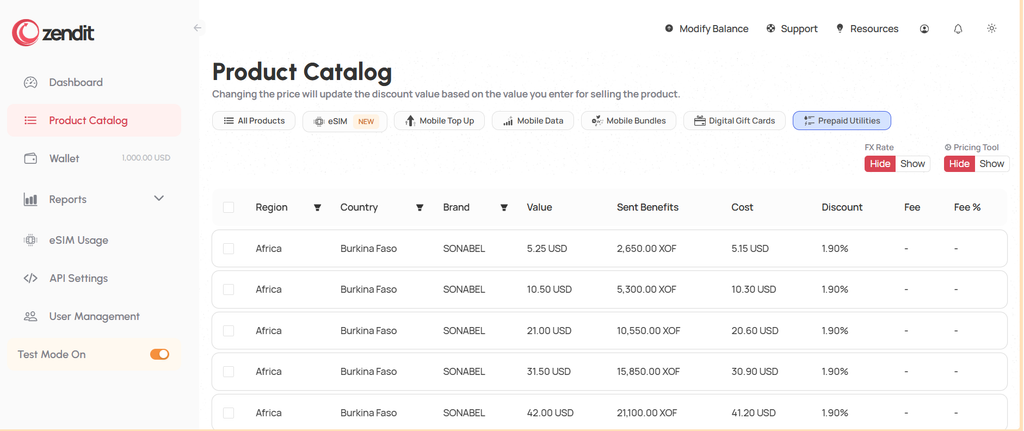
6.Create a utility payment transaction
You can purchase any of the available utility payment offers using the POST/vouchers/purchases endpoint:
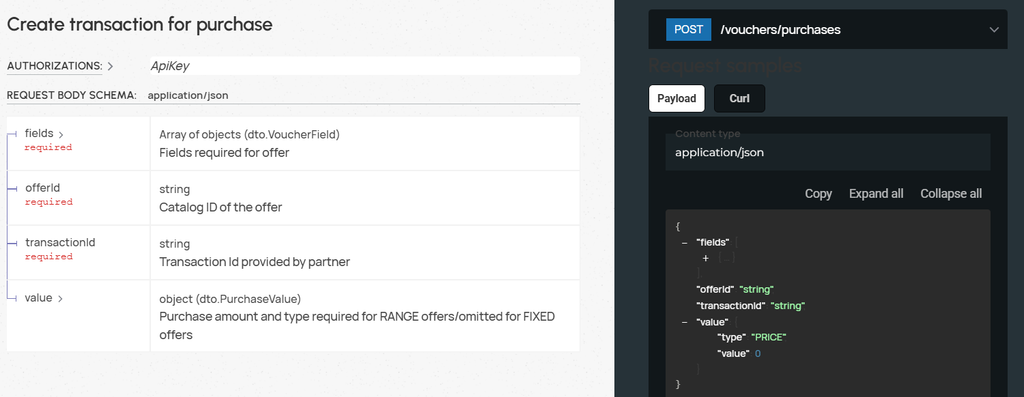
You can also create an order by clicking on any offer in the Product Catalog section.
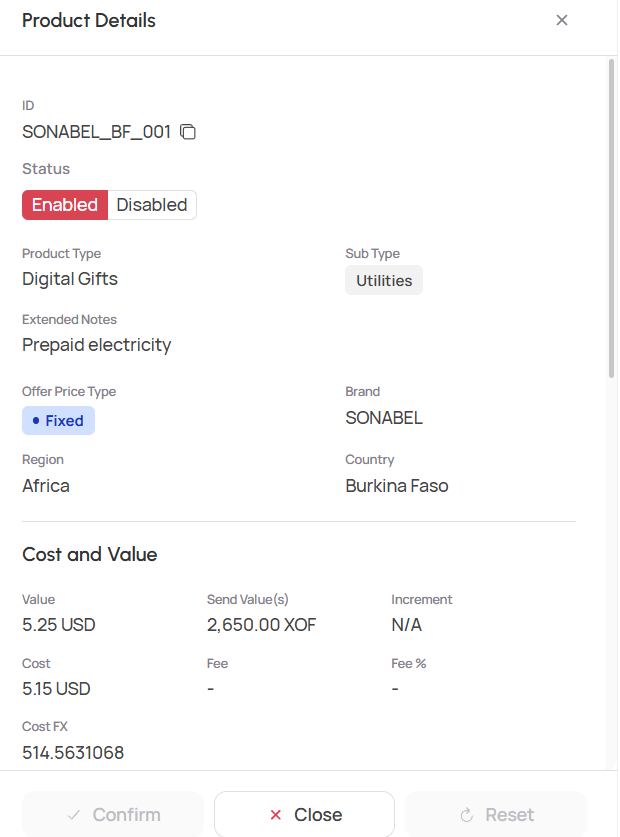
Here, you can enter the utility bill amount you want to purchase and the margin you want to add for resale.
7. View all transactions
You can do this through the GET/vouchers/purchases endpoint:
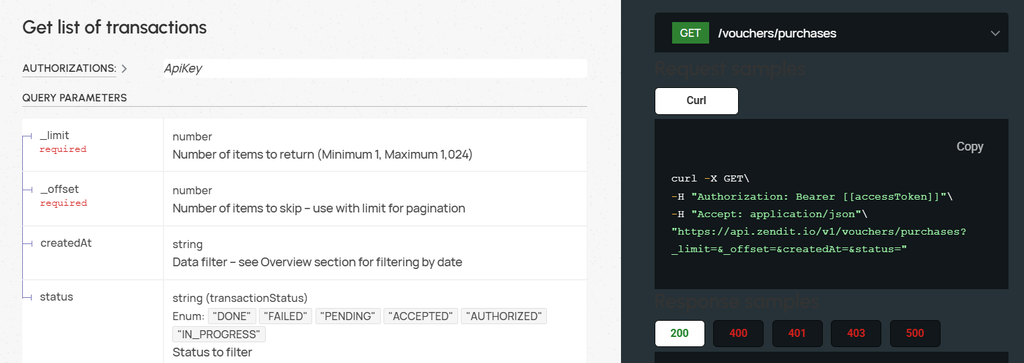
This API call will show the status of each transaction: accepted, pending, authorized, in progress, done, or failed.
You can get more detailed reports via the Reports section on the homepage:
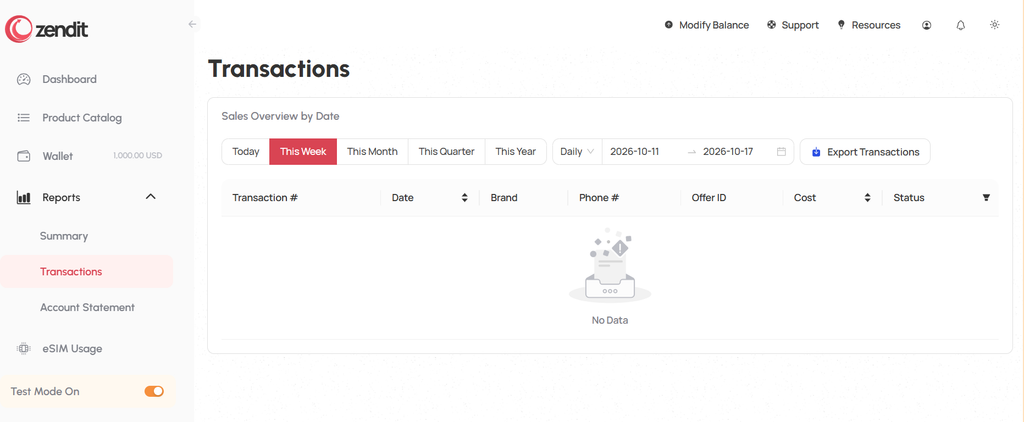
This section also provides an Account Statement where you can review your purchases, sales, and profits.
8. Monitor real-time updates with webhooks
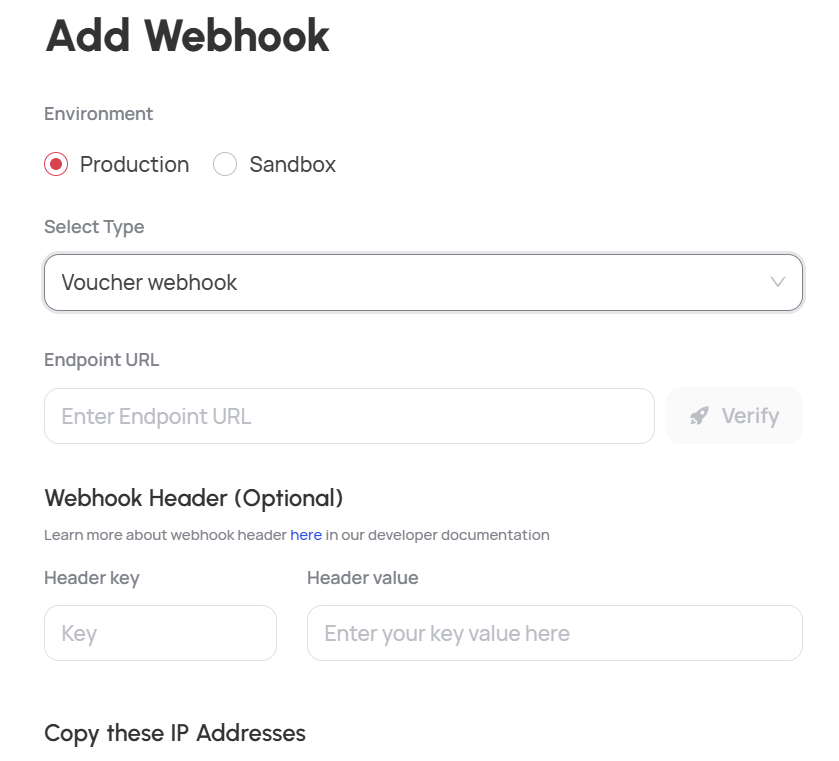
You can get real-time updates on every transaction through webhooks.
You can add a webhook in both test mode and production mode under the “API settings” section:
9. Go live in the production environment
Once you have tested all your API calls in test mode, you can switch to production mode in the bottom-left corner:
This lets you complete purchases and resell to your customers in your app or on your website.
You can complete the integration process within 24 hours. We have made it as seamless and secure as possible.
Our platform is platform-agnostic: you can integrate it into any app or environment, including iOS, Android, PHP, Node.js, among others.
With zendit, you can offer utility bill payments to your customers and build new revenue streams by upselling old customers and winning new ones.
Are you ready to explore utility bill payments as a new revenue stream? Register for zendit today or sign up for a demo to see how our API can help you.
Takeaways
- A utility API connects businesses to multiple billers through a single integration, allowing customers to pay electricity, water, gas, internet, and other bills from one platform.
- Businesses can earn revenue through markups, transaction fees, and service charges while expanding their digital service offerings.
- Consider geographic coverage, supported services, integration speed, transaction processing, security, reporting, and pricing when choosing a utility API.
- zendit’s prepaid utilities API provides SDKs, sandbox testing, API security features, transaction reporting, and webhooks to help businesses integrate and manage utility payments.
Frequently Asked Questions
1.What is a utility API?
A utility API is a software interface that connects businesses to utility providers, allowing customers to pay electricity, water, gas, internet, and other bills through an app or website. It enables businesses to access multiple billers through a single integration rather than connecting to each provider individually.
2. How does a utility API work?
A utility API connects a business’s platform to utility providers and handles tasks such as biller discovery, account validation, payment processing, and transaction confirmation. When a customer makes a payment, the API routes the transaction to the relevant provider and returns the payment status and confirmation.
3. What should you look for in a utility payment API?
Look for broad geographic and biller coverage, easy integration, fast transaction processing, strong security, account validation, and reliable customer support. Transparent pricing, detailed transaction reporting, and scalability are also important for managing costs and supporting business growth.
4. How do you integrate a utility bill payment API?
Start by creating an account with your chosen provider, obtaining API credentials, and reviewing the documentation and available SDKs. Test the integration in a sandbox environment, configure security settings and webhooks, verify transactions and reporting, and then switch to production once everything works as expected.